
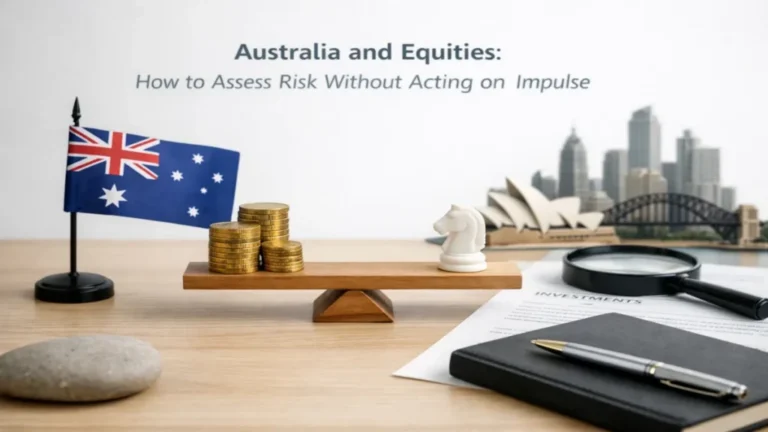
When it comes to investments, particularly in dynamic and globally connected markets like Australia, maintaining a clear and disciplined approach is essential. Investors are often faced with a constant flow of information, volatility, and opportunities that can trigger emotional decision-making. Developing the ability to assess risk thoughtfully, rather than reacting impulsively, becomes a key differentiator between short-term speculation and sustainable long-term success.
However, the allure of quick gains in the vibrant Australian equities market can often cloud judgment. This blog post will guide you through strategies to make informed decisions, ensuring your financial journey is both rewarding and sustainable.
A closer look at the Australian market
The land Down Under boasts a robust equities market, enticing investors with its diverse sectors, from mining to financial services. Each industry presents unique opportunities and challenges. To gauge these effectively, one needs to delve deeper into their specific characteristics and historical performance.
Studying market trends and economic indicators pertaining to Australia can provide significant insights. Such targeted knowledge equips investors to craft strategies that align with personal risk appetites, thus avoiding knee-jerk reactions to market fluctuations.
It’s essential to focus on the diversification within the Australian market. By spreading investments across various sectors, you mitigate specific risks inherent in any one industry. This balanced approach not only stabilises returns over time but also enhances portfolio resilience against unforeseen economic shifts.
Additionally, considering exposure to both domestic and internationally linked companies can further strengthen diversification. Australia’s strong trade relationships mean that global developments often influence local performance, making geographic and sectoral balance a valuable component of a well-structured portfolio.
Strategic risk assessment in Australian equities
Strategic risk assessment involves evaluating both systematic and unsystematic risks. Systematic risks, those affecting the entire market, like economic recessions, warrant attention to national economic policies and global influences. Conversely, unsystematic risks, particular to specific companies or sectors, demand scrutiny of individual entity performance and sector-specific challenges.
In Australia, a nation known for its dynamic ties to Asian markets, understanding these economic interplays becomes critical. Investors should regularly review their portfolios against these risks while maintaining an objective outlook. This involves setting personal thresholds for acceptable risk levels, which helps avoid overexposure to volatile stocks.
Tools such as risk-return models and analytical software can offer invaluable support. By integrating these methods into your investment strategy, you gain a clearer picture of potential returns against associated risk, ensuring decisions are data-driven rather than emotion-fueled.
Moreover, scenario analysis and stress testing can further enhance risk evaluation. By simulating different economic conditions, investors can better prepare for adverse situations and make proactive adjustments, reinforcing a more resilient investment approach.
Harnessing local insights for strategic gains
Tapping into local expertise offers a competitive edge in the Australian equities scene. Engaging with financial advisors familiar with regional dynamics can yield profound insights. These professionals are well-versed in understanding the nuances of local industries, regulatory changes, and economic forecasts.
Such expertise offers a human touch, steering clear from purely algorithm-based judgments, which may lack contextual awareness. Networking with seasoned investors or joining investment clubs can also prove advantageous. These platforms offer the chance to share experiences and strategies, often revealing firsthand intel that might not be readily available through mainstream channels.
By pooling knowledge, investors can enhance their risk assessment capabilities, learning from past successes and missteps to refine their own approaches. In addition, staying connected to local news sources and company disclosures can provide early signals of market shifts.
This continuous flow of relevant information enables investors to act with greater confidence and precision in a rapidly evolving environment. By consistently engaging with reliable sources and maintaining a proactive approach to information gathering, investors can better anticipate shifts before they fully materialise in the market.
Incorporating behavioural finance strategies
Behavioural finance delves into how psychological factors influence market movements and individual decisions. Understanding cognitive biases, such as overconfidence or herd mentality, can empower investors to recognise when emotions are clouding judgment.
This awareness enables the implementation of disciplined investment strategies that prioritise long-term objectives over short-term gratification. Incorporating regular review sessions to objectively analyse investment choices and market positions helps mitigate biased decisions.
These evaluations should focus on aligning actions with defined financial goals, reinforcing a rational approach to equity investments. Moreover, adopting a mindset of continuous learning and adaptability ensures that personal risk assessment methods evolve with market dynamics, rather than remaining static.
Developing structured decision-making frameworks, such as predefined entry and exit criteria, can further reduce emotional interference. By relying on clear rules instead of instinct, investors can maintain consistency and improve overall performance over time.
Concluding thoughts on prudent investing
In summation, the enticing realm of Australian equities requires a measured approach to risk assessment, avoiding impulsive actions that can jeopardise potential gains. By harnessing strategic methodologies, staying informed through local expertise, and embracing behavioural finance principles, investors can navigate this landscape effectively.
The key lies in marrying data-driven analysis with an understanding of personal risk tolerance and market nuances. Ultimately, successful investing in Australia’s equities market is not about chasing immediate profits but fostering a strategy that thrives on patience, research, and informed decision-making.
By cultivating these attributes, investors can confidently steer their portfolios through market ebbs and flows, ensuring a rewarding and sustainable investment journey. Always remember, in investments, it’s not just the returns that count but how you secure those returns through calculated risk-taking.
Equally important is maintaining consistency and discipline over time. Markets will inevitably present periods of uncertainty and volatility, but a well-defined strategy, grounded in clear objectives and thoughtful risk management, enables investors to stay focused and resilient in the face of changing conditions.